
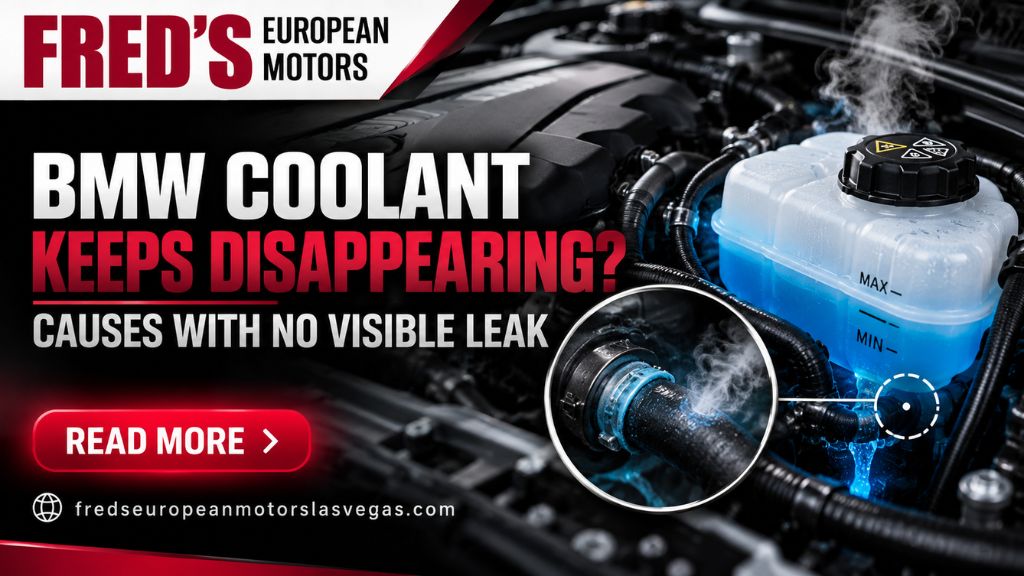
A BMW coolant level that keeps dropping without an obvious puddle deserves an inspection. The leak may occur only when the cooling system is hot and pressurized, or coolant could evaporate from a hot surface before it reaches the ground. Some losses are connected to a reservoir cap, hoses, a radiator, or a water-pump seal. Less commonly, coolant can enter the engine internally. The important question is not whether you can see a puddle, but where the fluid is going and whether the engine is at risk of overheating. Here is a practical approach to finding the cause.
Is any amount of disappearing coolant normal?
Coolant in a healthy sealed system does not normally need repeated top-ups. A small level difference between hot and cold conditions is expected because coolant expands as it warms. That is different from a reservoir that repeatedly falls below its specified cold mark or a warning that returns after the correct level has been restored.
Check the owner’s manual for the correct method and level marking. Never remove the cap while the system is hot. Steam and pressurized coolant can cause serious burns. If the vehicle has overheated or displays a high-temperature warning, shut it down safely and obtain assistance rather than testing how far it can go.
1. Expansion tank, cap, and reservoir connections
An expansion tank can develop fine cracks near a seam, mounting point, or hose outlet. The cap contains a pressure-control mechanism, and a weakened seal can allow coolant vapor or liquid to escape as the engine warms. Both issues can leave little evidence on the parking surface.
Look only when the engine is completely cold. Dried residue around the reservoir, damp hose fittings, or a recurring coolant odor can justify closer testing. A technician should inspect the tank and use an appropriate pressure test rather than assuming every low-level warning means a failed sensor.
2. Hose connections and small plastic fittings
Cooling-system hoses and connectors experience repeated heating and cooling. A tiny split at a plastic fitting or worn sealing ring may remain dry when the vehicle is parked, then seep under operating pressure. Some leaks develop toward the rear of an engine or beneath intake components where they are hard to see.
Fluid may run along an underbody cover before dripping away from the actual defect. This is why the first wet area a technician sees is not always the source. A careful inspection follows the residue uphill toward the leaking connection.
3. Water pump and thermostat housing
Water-pump seals, nearby fittings, and thermostat housings are additional possible leak points. The exact configuration varies by engine, and many BMW models have electronically managed cooling components. A pump-related warning or abnormal fan behavior can add useful context but does not prove which component needs replacement.
The technician may inspect the pump and housing under pressure, check fault data, and distinguish a coolant leak from an electrical or circulation problem. These differences matter because a low level and a pump-control fault can occur separately or together.
4. Radiator, heat exchanger, or overlooked external leak
A small radiator crack, seam leak, or damaged hose connection can release coolant only when hot. The cooling system may include several heat exchangers depending on the vehicle’s equipment and engine. Airflow can carry escaping coolant away from the source and a protective undertray can hide fresh drops.
An inspection of the radiator and accessible heat exchangers is part of the broader cooling-system diagnosis. A shop may remove underbody covers when justified, inspect dried deposits, and pressure-test the relevant circuit using model-specific procedures.
5. Cabin heater circuit or internal cooling leak
A sweet odor inside the cabin, persistent windshield fogging, or damp carpet can suggest a heater-system leak, although each has other possible explanations. Internal engine coolant loss is less common than many people assume from an online search and should not be diagnosed solely because the level drops.
Continuous white exhaust vapor after the engine is fully warm, contaminated engine fluids, unusual combustion gases in the coolant, or repeated overheating may warrant further testing. A technician can select tests based on the evidence instead of immediately recommending major engine work.
6. A mistaken level reading or improperly completed refill
A coolant warning may occasionally be related to a level sensor or wiring fault. Air remaining in the system after previous work can also change the reservoir level as the cooling circuit purges, although persistent loss must still be investigated. Some procedures require vehicle-specific filling or bleeding methods.
Tell the shop whether the reservoir was recently replaced, a hose was disconnected, or the cooling system was serviced. That service history helps separate an incomplete refill from an active leak without ignoring either possibility.
How technicians locate a BMW coolant leak without a puddle
The usual process begins with a cold level check, inspection for residue, and examination of hoses and connections. Pressure testing can reveal small external leaks that appear only under pressure. Some cases benefit from approved fluorescent dye or inspection after the engine reaches operating temperature under controlled conditions.
When external testing finds nothing, the technician may consider cap testing, diagnostic fault data, a combustion-gas test, or other model-appropriate checks. The objective is to demonstrate a cause, not replace the water pump, radiator, and reservoir as a guess. Seek European vehicle diagnostics if the warning returns after a correct refill.
What to do if the low-coolant warning comes back
Do not keep driving with an overheating message or visible steam. Let the engine cool completely before checking the reservoir according to the manual. If the level is clearly low, use only manufacturer-approved coolant and the specified mixture if emergency topping up is appropriate; do not mix unknown formulations.
Record the warning date and mileage, whether the heater works, and any odor or unusual fan operation. Repeated top-ups without locating the cause can conceal a defect until the system loses enough coolant to overheat. Even short periods of overheating can cause substantial damage.
Planning the repair and preventing a repeat
Ask for the exact failed component, whether the estimate includes coolant and necessary sealing parts, and how the shop will verify the repair. If several aged fittings are exposed during disassembly, the technician can explain which additional replacements are required and which are optional.
A post-repair pressure check, correct bleeding procedure, and follow-up level check can help confirm the result. For drivers in Las Vegas, regular attention to the radiator and coolant system is valuable, but frequent coolant loss is a fault to diagnose rather than routine seasonal consumption.
Conclusion
A BMW coolant level that keeps falling without a visible puddle is not a mystery to dismiss. The most useful next step is controlled testing of the reservoir, cap, hoses, pump, radiator, and any less accessible leak points. Internal leakage belongs on the list only when supporting symptoms justify it. If an overheating alert appears, stop driving and arrange assistance. Fred’s European Motors provides cooling-system inspections in Las Vegas, where identifying the specific leak before replacement helps avoid unnecessary repairs.
Frequently Asked Questions
Yes. Small leaks may reach hot engine parts, and airflow or underbody panels can prevent obvious dripping. The loss still needs to be traced.
Continued driving can be risky, especially if the level is genuinely low. Stop immediately if temperature rises, steam appears, or an overheating warning activates.
No. A pump is only one possible source. The tank, cap, radiator, hoses, sensors, and other components must be considered.
Trapped air or an incomplete bleeding process may influence level after work, but a persistent drop can indicate a remaining or new leak. Request a recheck.

European Auto Repair and Automotive Maintenance
Fred shares automotive maintenance insights from Fred’s European Motors, a Las Vegas repair shop with 38 years of experience. The team services European vehicles, including BMW, Mercedes-Benz, Audi, and Jaguar. His articles help drivers understand diagnostics, routine maintenance, common repairs, vehicle warning signs, and desert-climate challenges.

 ICONIER Digital Agency