
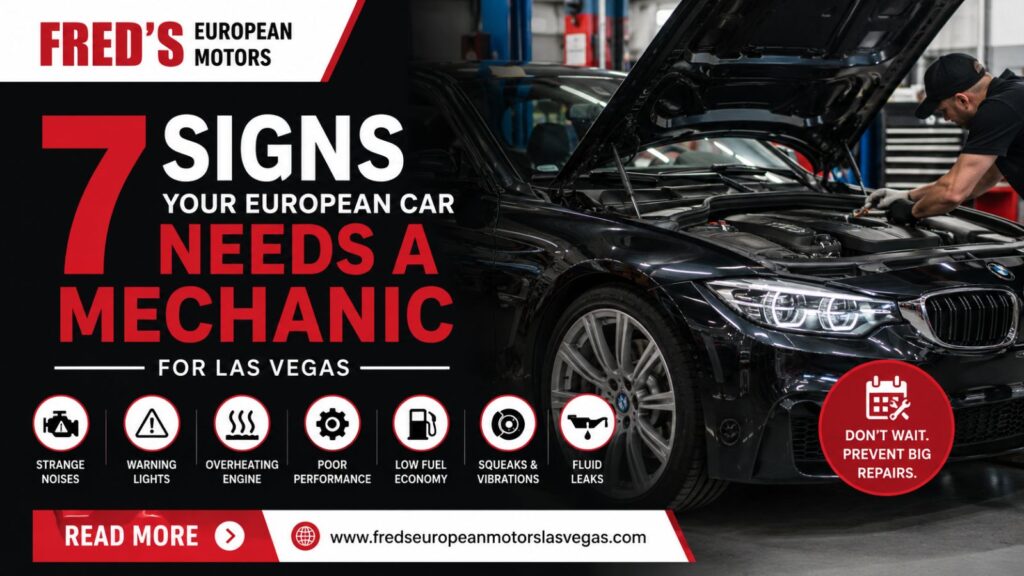
Warning lights, unusual noises, fluid leaks, poor braking, rough engine performance, strange smells, and unstable handling are all signs that your European car needs professional attention. Some problems can wait for a scheduled appointment. Others such as overheating, loss of oil pressure, severe brake problems, smoke, or major power loss mean you should stop driving as soon as it is safe. European vehicles often combine mechanical systems with advanced electronics, sensors, and control modules. Early diagnosis can prevent a relatively small fault from damaging related components or leaving you stranded in Las Vegas traffic.
Quick Guide: When Should You Stop Driving?
| What you notice | Urgency | Recommended action |
| Solid warning light with normal driving | Moderate | Schedule an inspection soon |
| New noise without performance changes | Moderate | Limit driving and arrange diagnosis |
| Soft brake pedal or reduced braking | Critical | Stop driving and arrange assistance |
| Rising temperature gauge or steam | Critical | Pull over and shut off the engine |
| Red oil-pressure warning | Critical | Shut off the engine immediately |
| Severe shaking or power loss | Critical | Stop driving when safe |
| Strong fuel smell or smoke | Critical | Pull over and seek assistance |
| Small fluid spot with no warning | High | Identify the fluid and schedule service |
These recommendations are general. Check the owner’s manual for your specific BMW, Mercedes-Benz, Audi, Volkswagen, Porsche, MINI, Volvo, Jaguar, Land Rover, or other European vehicle.
1. Warning Lights Stay On or Keep Returning
Modern European vehicles monitor the engine, transmission, brakes, stability control, cooling system, battery, airbags, and other systems.
Warnings that need attention include:
- Check engine light
- ABS or brake warning
- Coolant-temperature warning
- Oil-pressure warning
- Battery or charging warning
- Transmission or drivetrain message
- Suspension warning
- Reduced-power message
A warning light does not always identify the failed part. It tells you that the vehicle detected an abnormal condition. A solid check engine light with normal performance may allow a short drive to a repair shop. A flashing check engine light, red oil warning, or overheating alert is more serious. Do not repeatedly clear warning lights without diagnosing the cause. Erasing codes can remove useful data and make intermittent problems harder to find.
2. You Hear a New or Unusual Noise
Cars make many normal sounds, but a new noise that becomes louder, changes with speed, or appears during braking or turning should be inspected.
Common warning noises include:
- Engine ticking or knocking
- Grinding while braking
- Squeaking over bumps
- Humming that changes with road speed
- Clunking while turning
- Whistling during acceleration
- Rattling during startup
- Clicking from a wheel
The same sound can have several causes. For example, humming may come from a tire, wheel bearing, driveline component, or brake part. Do not rely only on an online sound description. A technician may need to road-test the vehicle and inspect the relevant system. Stop driving when a noise is accompanied by low oil pressure, overheating, severe vibration, smoke, reduced braking, or major power loss.
3. Braking Feels Different
Brake changes require prompt attention because they affect your ability to stop safely.
Warning signs include:
- Soft or sinking brake pedal
- Longer stopping distance
- Grinding
- Vehicle pulling during braking
- Steering-wheel vibration
- Brake or ABS warning lights
- Burning smell near a wheel
- Smoke from a brake assembly
A soft or sinking pedal may indicate a hydraulic leak, air in the system, damaged brake hose, or master-cylinder problem. Do not continue driving when the pedal approaches the floor.
European vehicles may also use electronic pad-wear sensors, electronic parking brakes, ABS, and stability-control systems. Proper diagnosis may require both a physical inspection and manufacturer-capable diagnostic equipment.
4. The Engine Hesitates, Shakes, or Loses Power
A European car should accelerate and idle predictably. A noticeable change in performance deserves diagnosis.
Possible symptoms include:
- Rough idle
- Hesitation
- Engine shaking
- Stalling
- Difficult starting
- Reduced-power mode
- Poor acceleration
- Increased fuel consumption
- Flashing check engine light
Potential causes include:
- Worn spark plugs
- Ignition-coil failure
- Fuel-delivery problems
- Intake or vacuum leaks
- Turbocharger or boost faults
- Sensor or wiring problems
- Low system voltage
- Mechanical engine faults
A trouble code is only a starting point. A misfire code, for example, does not automatically prove that an ignition coil needs replacement. Stop driving when the vehicle shakes severely, loses substantial power, stalls repeatedly, overheats, or displays a flashing check engine light.
5. You Notice a New or Strong Smell
Unusual odors can reveal a problem before a warning light appears.
Sweet Smell:- A sweet odor may indicate leaking coolant. Look for a low coolant warning, rising temperature, steam, or fluid under the vehicle. Never open a pressurized coolant reservoir while the engine is hot.
Burning Oil Smell:- Oil may be leaking onto a hot engine or exhaust component. You may also notice smoke from the engine compartment or oil spots after parking.
Raw Fuel Smell:- A strong fuel odor may indicate a leak or fuel-system fault. Pull over, turn off the engine, avoid flames or sparks, and arrange assistance.
Burning Rubber or Electrical Smell:- This may come from a slipping belt, damaged wiring, overheated electrical component, or material contacting a hot surface.
Hot Brake Smell:- A strong odor near one wheel may indicate an overheating brake or sticking caliper. Stop driving if the wheel is smoking or braking performance changes.
6. Fluid Is Leaking Under the Vehicle
Not every puddle is a serious leak. Clear water under the passenger side after using the air conditioner is often normal condensation.
Other fluids require attention:
- Engine oil: Brown or black and slippery
- Coolant: Often brightly colored, though color varies
- Brake fluid: Clear to amber and slippery
- Transmission fluid: Color depends on the vehicle and fluid type
- Power-steering fluid: Used only on vehicles with hydraulic systems
- Fuel: Thin fluid with a strong gasoline or diesel odor
Fluid color alone cannot reliably identify every leak. Coolants and transmission fluids come in several colors, and contamination can change their appearance. Do not drive when the leak is substantial, the brake pedal feels abnormal, the temperature is rising, the oil-pressure warning is on, or fuel is leaking. Take a photo and note where the fluid appears under the vehicle. That information may help the repair shop locate the source.
7. Steering or Handling Feels Unstable
Changes in steering and handling can indicate tire, alignment, suspension, steering, brake, or wheel-bearing problems.
Watch for:
- Vehicle drifting or wandering
- Steering wheel no longer centered
- Excessive bouncing
- Clunking over bumps
- Uneven tire wear
- Vehicle pulling during braking
- Steering vibration
- Loose or delayed steering response
- Vehicle sitting lower on one side
A wheel alignment may not solve every pulling or tire-wear complaint. The technician should inspect tire condition, tire pressure, suspension components, steering parts, brakes, and wheel alignment before recommending repairs.
Stop driving if the steering suddenly becomes difficult, the vehicle feels unsafe to control, a tire has a bulge, or a suspension component appears damaged.
How Las Vegas Conditions Can Expose Existing Problems
Las Vegas heat does not cause every European car problem, but it can place more demand on systems that are already weak.
High temperatures and stop-and-go traffic may expose problems involving:
- Battery condition
- Cooling-system performance
- Air conditioning
- Tires
- Rubber hoses and belts
- Engine oil leaks
- Extended idling
- Brake heat
- Electrical connections
Dust can also affect engine and cabin filters and restrict airflow through cooling components. The correct response is to diagnose the actual problem rather than blame every warning light or mechanical fault on desert weather.
What a European Car Inspection Should Include
The inspection should match the symptoms, but it may involve:
- Complete diagnostic scan
- Warning-light and fault-code review
- Fluid-level and leak inspection
- Battery and charging-system test
- Brake measurements
- Tire and suspension inspection
- Cooling-system pressure test
- Road test
- Live sensor-data review
- Mechanical or electrical testing
A scan tool alone does not diagnose the vehicle. The technician must interpret the information and test the suspected system.
When to Schedule a Mechanic Immediately
Arrange prompt service when:
- A warning light repeatedly returns
- The vehicle develops a new noise
- Engine performance changes
- Fluid appears under the car
- Braking or steering feels different
- The vehicle begins overheating
- You smell fuel or burning material
- Multiple symptoms appear together
A minor symptom does not always mean an expensive repair. Waiting until the vehicle breaks down, however, usually reduces your options and can increase the damage.
European Car Repair in Las Vegas
Fred’s European Motors provides diagnostics, maintenance, and repair services for European vehicles in Las Vegas.
When scheduling an inspection, provide:
- Vehicle year, make, and model
- Current mileage
- Warning messages or lights
- When the symptom began
- Whether it happens hot or cold
- Recent repair or battery history
- Photos or videos when helpful
Clear information can help the technician reproduce an intermittent problem and avoid unnecessary guesswork.
Final Takeaway
Your European car usually gives some warning before a major failure. Pay attention to warning lights, new noises, braking changes, performance loss, unusual odors, fluid leaks, and unstable handling. Do not wait for several symptoms to appear at once. Early diagnosis can help protect your safety, reduce related damage, and lower the chance of being stranded in Las Vegas traffic.
FAQS
It depends on the warning and vehicle behavior. A solid check engine light may allow limited driving, while an oil-pressure, overheating, brake, or flashing check engine warning may require you to stop immediately.
No, but new or worsening noises should be investigated. Stop driving if the noise appears with overheating, poor braking, severe vibration, or major power loss.
Follow the manufacturer’s maintenance schedule and onboard service system. Also arrange an inspection whenever a new warning light, leak, noise, smell, or performance change appears.
Not every service requires a dealership or brand-exclusive shop. The facility should, however, have appropriate experience, equipment, technical information, parts, and fluids for the vehicle.
Loss of oil pressure, overheating, poor braking, fuel leaks, smoke, severe shaking, or sudden steering problems all require immediate attention.

 ICONIER Digital Agency